Halloween marketing ideas you can launch in a week
Halloween marketing ideas for shops, restaurants, service businesses and online stores, with a seven-day launch plan, templates and Canadian contest rules.

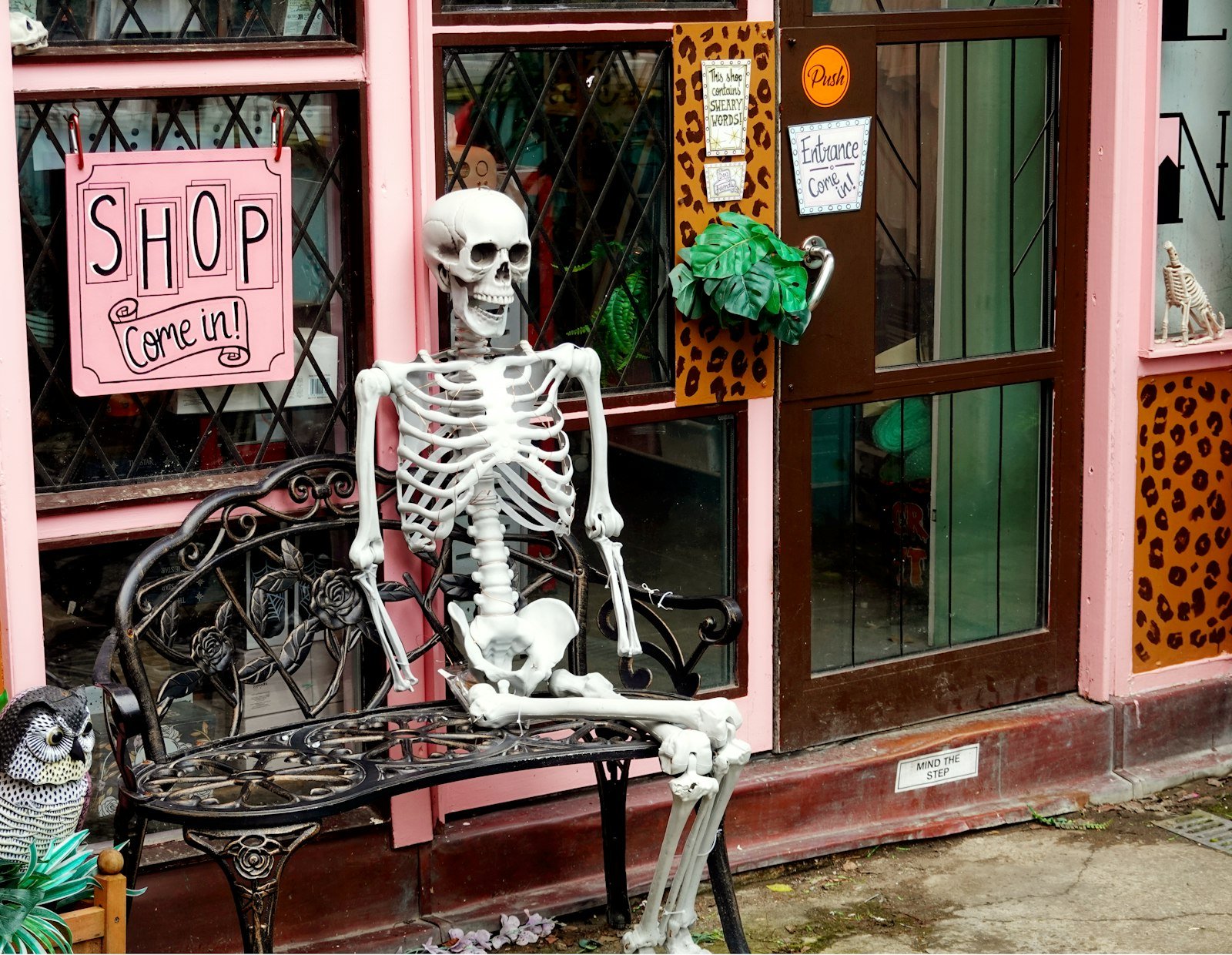
Pick one Halloween idea that gives people something to see, something to do and a date it ends. Spend one day choosing, one day making the sign, posts and email, and one day announcing it in your window, to your email list, on social media and on your Google Business Profile. Run it for three or four days, end it on October 31, thank people and count the result. If you run a contest in Canada, state the prizes, the closing date and that no purchase is needed.
- Halloween is Saturday, October 31, 2026. A one-week campaign can start as late as October 24.
- One idea done properly works better than five done halfway.
- A good idea has something to see, something to do and an end date.
- In a 2025 Leger survey, 31% of Canadian adults planned to celebrate, and about half of parents and adults under 35.
- Canadian contests must disclose the prizes and their value, and cannot make a purchase the only way to enter.
- Save your photos, sign files and notes so next year takes a day.
Key terms explained (12)
- Campaign
- A planned set of messages about one offer, with a start date and an end date.
- Offer
- What the customer gets, what it costs and when it ends.
- Bundle
- Two or more products or services sold together at one price.
- Foot traffic
- The number of people who walk past or into your business.
- Google Business Profile
- Your free business listing on Google Search and Google Maps. You can add posts, photos and hours to it.
- Email list
- The people who gave you their email address and agreed to hear from you.
- Promotional contest
- A contest or draw run to promote a business, where people can win a prize.
- Skill-testing question
- A simple question, usually maths, that a contest winner in Canada answers before receiving the prize.
- Competition Bureau
- The Canadian federal agency that enforces the rules on advertising and promotional contests.
- CASL
- Canada’s Anti-Spam Legislation. It sets the rules for marketing emails and texts, including consent.
- NRF
- The National Retail Federation, a trade group for retailers in the United States. It runs a yearly Halloween survey.
- User-generated content
- Photos, videos and posts made by your customers, not by you.
Halloween is on Saturday, October 31 this year. It is a low-pressure holiday. Nobody expects a huge discount, people are in a good mood, and a small effort gets noticed. That makes it a good fit for a small business with one free week and no big budget.
This playbook gives you ideas sorted by type of business, a seven-day plan, words you can copy for posts and emails, and the rules to check if you want to run a contest in Canada.
Is Halloween worth it for a small business?
It depends on the goal. Halloween is rarely your biggest sales week. It is a reason to be noticed, to bring past customers back, and to give people something to share. Here is what the surveys say about how many people take part.
In the United States, the National Retail Federation (NRF) 2026 Halloween survey expects total spending of $13.5 billion, a record, up from $13.1 billion in 2025. That works out to $115.14 per person. In the survey, 74% said they plan to celebrate.
In Canada, the figures are smaller. A Leger survey of 1,537 Canadian adults in late October 2025 found that 31% planned to celebrate, up 6 points from the year before. Among parents it was 48%, and among adults aged 18 to 34 it was 51%. About 46% planned to hand out candy and 39% planned to decorate. Canadians expected to spend an average of $44.32 on candy.
Three points from these surveys are useful when you plan:
- Parents and younger adults take part most. If they are your customers, Halloween deserves more of your time.
- People are watching their budgets. In the NRF write-up of the same survey, 79% of shoppers expected higher prices this year, and many said they compare prices and look for coupons and sales. A small, clear offer fits that mood.
- Only some shop local. In the NRF survey, 13% said they would shop for Halloween at local or small businesses, compared with 39% at discount stores. You will not win on price. You can win on being nearby, friendly and fun.
One more thing about timing. NRF found that 49% of Halloween shoppers started in September or earlier. If you sell costumes or decorations, most of that shopping is done. A one-week campaign in late October is for everyone else: it is about attention and visits, not Halloween products.
Pick one idea, not five
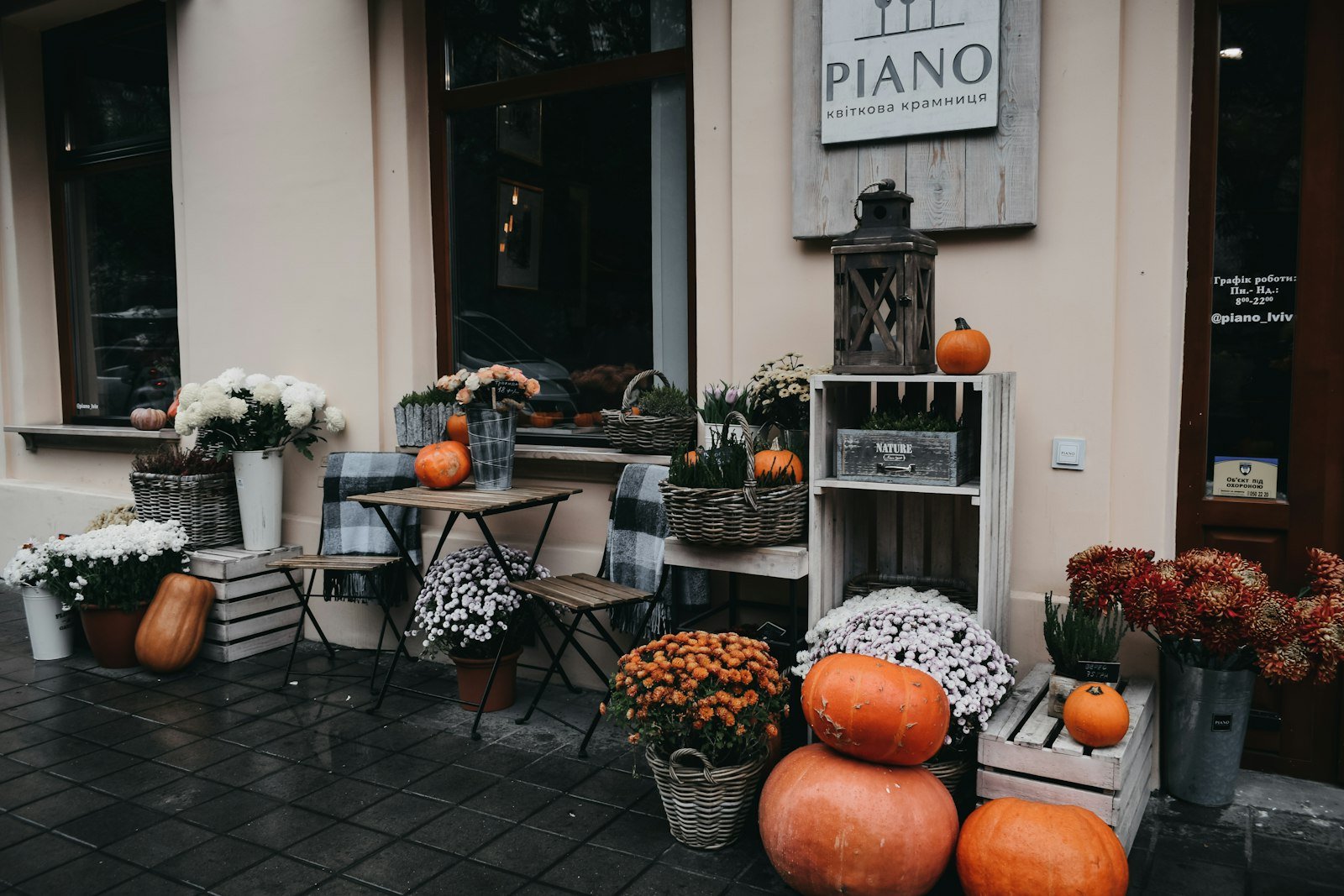
The most common mistake is doing a little of everything: a few decorations, a vague post, a discount nobody hears about. One idea done properly works better. A good Halloween idea has three parts:
- Something to see. A window, a photo, a menu item, a costume.
- Something to do. Come in, book, order, enter, share.
- A date it ends. October 31, or sooner.
Use the picker to find a starting point for your type of business.
Halloween idea picker
Pick your type of business to see three ideas you can launch this week.
These are starting points. Choose one, not all three, and write the end date into everything you publish.
Here is the full list, with what each idea needs from you.
| Idea | Best for | What you need | Cost |
|---|---|---|---|
| Dressed window with one offer | Shops, salons, clinics | Decorations, a printed sign, an end date | Low |
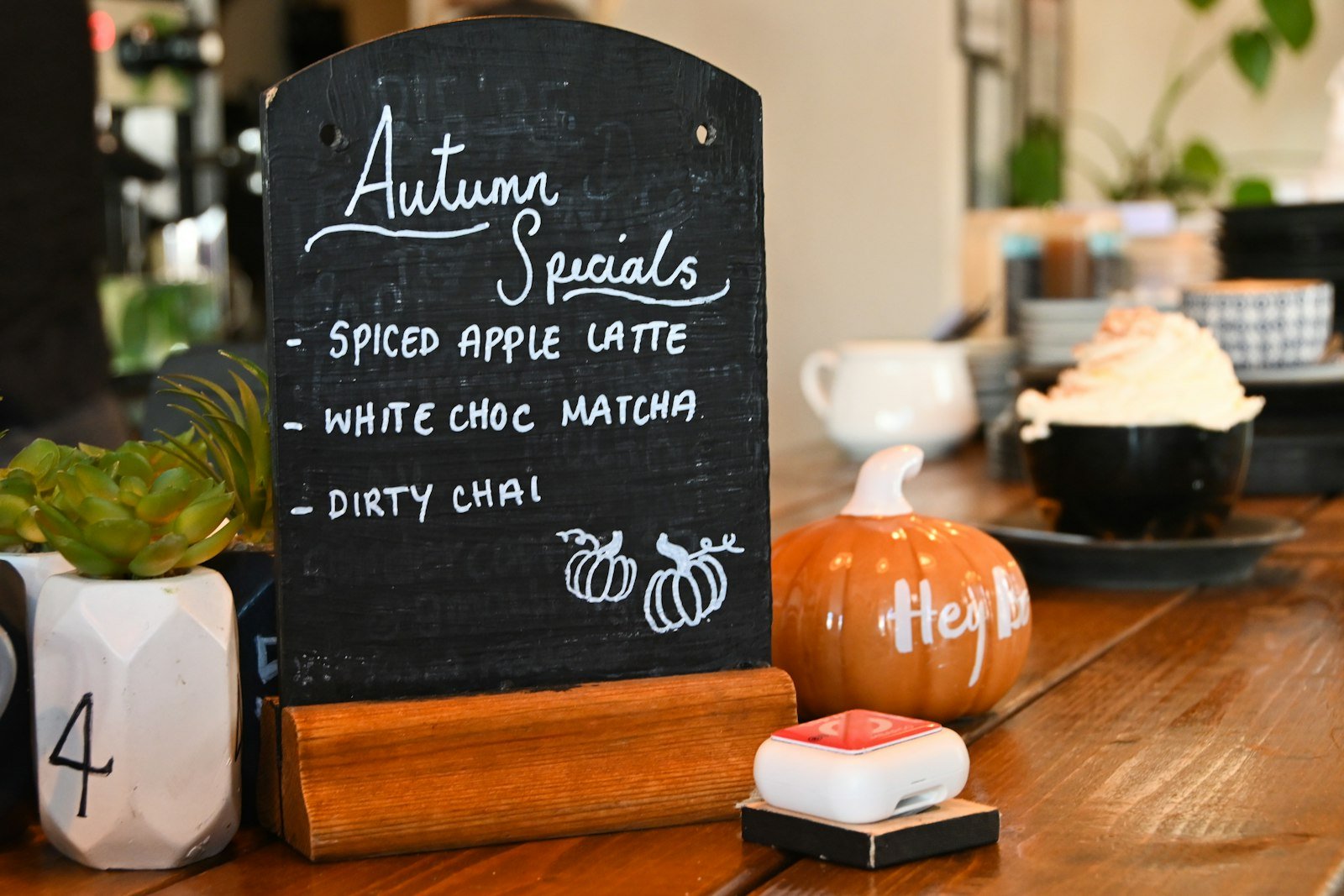
| Limited menu item | Restaurants, cafes, bakeries | One recipe, a chalkboard, a photo | Low |
| Costume day or night | Restaurants, gyms, studios, shops | A small reward and a post announcing it | Low |
| Halloween bundle | Shops, online stores | Products you already stock and one price | None |
| Photo or costume contest | Any business with a social media following | A prize, written rules, a closing date | Cost of the prize |
| Trick-or-treat stop | Any business on a street with foot traffic | Treats and a card with a November offer | Low |
| Seasonal tip email with an offer | Service businesses | Your email list and one clear offer | None |
| 72-hour online offer | Online stores | A code, a banner and three emails | None |
The seven-day launch plan
If you start by Saturday, October 24, you can run this plan and finish on Halloween itself. Start earlier if you can.
Tick the steps as you go. Your progress is saved in this browser.
Day 1: pick
- Choose one idea from the table.
- Set one goal you can count, such as 40 visits, 15 bookings or 100 contest entries.
- Decide the offer and the end date.
Day 2: make
- Make the sign or graphic. Use the same wording everywhere.
- Take three or four photos or short videos you can post through the week.
- Write the email and the social posts. Templates are below.
- If it is a contest, write the rules. See the section on contests.
Day 3: share
- Put the sign in the window or the banner on the website.
- Send the email to your list.
- Post on your social media accounts.
- Add a post to your Google Business Profile.
Your Google Business Profile is your free listing on Google Search and Maps. Google's help page on posts describes three post types: Update, Offer and Event. An Offer post has a title, start and end dates, and optional terms, which suits a one-week promotion. The local SEO checklist covers the rest of the profile.
Days 4 to 6: run
- Post once a day: a photo of the window, a customer in costume (with permission), the menu item being made.
- Reply to every comment and message the same day.
- Share what customers post about you.
Day 7: close
- Draw the winner or end the offer when you said you would.
- Thank people in a post and an email.
- Count the result against your goal.
- Save the photos and your notes for next year.
Social post and email templates
Replace the parts in square brackets. Keep the end date in every one. If you want stronger first lines, the hooks playbook has six formulas, and the subject lines playbook covers the email side.
Something is different in our window this week.
[One sentence about the offer or the item.]
On until Saturday, October 31. [Address or link]
Costume day is [day and date].
Come in dressed up and get [reward] with your [order, visit or booking].
Kids, adults and well-behaved dogs all count.
Win [prize, with its approximate value].
To enter: [how to enter]. No purchase needed.
Open to residents of [area] aged [age] and over. Closes [date and time]. One winner drawn on [date]. Full rules: [link]
Subject: A small Halloween treat from [business name]
Hi [first name],
No tricks. [Offer in one sentence.]
It runs until Saturday, October 31.
[Button: one clear action]
[Your name]
Subject: Thank you for making our Halloween
Hi [first name],
Thank you for [visiting, entering, ordering] this week. [One line about what happened, such as how many people took part.]
As a thank-you, [small reason to come back in November].
[Your name]
Running a contest in Canada: the rules to check
A contest is the Halloween idea most likely to go wrong, because it has legal rules. In Canada, the Competition Bureau (the federal agency that enforces advertising rules) publishes enforcement guidelines for promotional contests. The main points are short.
- Tell people the key facts up front. The Competition Act requires "adequate and fair disclosure" of the number and approximate value of the prizes, the areas they relate to, and any fact that materially affects the chances of winning.
- Say when it closes. The guidelines list the contest closing date among the details to disclose.
- Do not require a purchase. The guidelines explain that under the Criminal Code, buying something cannot be the only way to enter a game of chance. Offer a free way to enter, and say so. In the Bureau's words: "Where no purchase is required, this fact should also be prominently disclosed."
- Include a skill-testing question. This is why Canadian contests ask winners to answer a simple maths question. The guidelines list the skill-testing question among the rules to disclose.
- Award the prize on time. Handing over the prize must not be unduly delayed.
Two more things to check before you post:
- Emailing the people who entered. CASL (Canada's Anti-Spam Legislation) applies to marketing emails and texts. The CRTC guidance says a pre-ticked box does not count as consent. If you want to add entrants to your list, give them an empty box to tick.
- Photos of customers and children. Ask before you post anyone's photo. For children, ask the parent.
This is general information, not legal advice. Rules can differ by province, and the social media platform you use has its own promotion rules. For a large prize, ask a lawyer to review your rules.
If you collect entries at an event or a market stall, the lead magnets playbook compares contests with other ways to collect contact details.
Measure it, then save it for next year
On November 1, write down four numbers:
- What it cost. Decorations, prize, printing, treats and your time.
- What came in. Visits, orders, bookings or entries during the week, compared with a normal week.
- New contacts. People who joined your list or followed you.
- What people said. Comments, messages and photos.
Put the photos, the sign file and the notes in one folder named Halloween. Next October, you can launch in a day and not a week. Then turn to the bigger season: the Black Friday marketing plan starts in mid-October, and fall marketing for local service businesses covers the weeks in between.
Tools for the job
| Tool | Use it for | Cost |
|---|---|---|
| Canva | Window signs, social graphics and contest posts | Free and paid plans |
| Google Business Profile | An Offer or Event post on Search and Maps | Free |
| Meta Business Suite | Scheduling Facebook and Instagram posts for the week | Free |
| Mailchimp | The announcement and thank-you emails | Free and paid plans |
| Google Forms | Collecting contest entries with a consent tick box | Free |
Plans and pricing change. Check each tool's site for current details.
Frequently asked questions
When should I start Halloween marketing?
For a simple promotion, one week is enough, so start by October 24. If you sell costumes or decorations, start in September, because the NRF survey found that 49% of Halloween shoppers begin in September or earlier.
What is a good Halloween promotion for a service business?
A short seasonal email with a useful tip and one offer that ends October 31, a before-and-after photo with a Halloween caption, or a treat stop at a local event with your card attached.
Do I need to offer a discount?
No. A limited menu item, a costume day, a bundle or a small gift gives people a reason to come in without cutting your prices.
Can I run a Halloween giveaway on Instagram in Canada?
Yes, if you follow the rules. State the number and approximate value of the prizes, who can enter, the closing date and how to enter. Do not make a purchase the only way to enter, and include a skill-testing question. Also check the platform's own promotion rules. This is general information, not legal advice.
How do I know if it worked?
Compare visits, orders or bookings during the week with a normal week, and count new email sign-ups and followers. Then compare that with what you spent.
Related playbooks
Browse every playbook on content, or see all marketing playbooks.
Sources
- Halloween data and trends, 2026National Retail Federation (NRF) · survey conducted September 1 to 9, 2026
- Halloween shoppers find ways to stretch their budgetsNational Retail Federation (NRF) · September 29, 2026
- Halloween habits and beliefsLeger · October 29, 2025
- Promotional contests enforcement guidelinesCompetition Bureau Canada
- Frequently asked questions about Canada's Anti-Spam LegislationCanadian Radio-television and Telecommunications Commission (CRTC)
- About posts on Google Business ProfileGoogle Business Profile Help
Remar Catapang is a full-funnel marketing strategist based in Ontario, Canada. He has worked in marketing since 2020 and continues to lead search, CRM automation, web, paid media and experiential campaigns for businesses in Canada, the United States, Australia, Egypt and the Philippines. His playbooks are based on that ongoing work. Questions about this playbook: remarcatapangjr@gmail.com