Trade show booth on a budget: how to plan, staff and follow up for leads
How a small business can plan a trade show booth that brings in leads: the real cost, an eight-week countdown, a booth script and a 72-hour follow-up.


Work out the full cost before you book, not just the booth fee, and divide it by the leads you expect. Choose a show your buyers attend and set one goal you can count. Use the eight weeks before the show to build one clear offer, a readable sign, a QR code lead form with a permission tick box, and the follow-up emails. Staff the booth so nobody handles more than about six real conversations an hour. Follow up every lead within 72 hours.
- The booth fee is only part of the cost. In BDC’s example, a $5,000 booth meant about $17,250 in total.
- Divide the total cost by expected leads before you book, and compare it with your other channels.
- One offer and one question on the sign stop more people than a list of services.
- Plan for about six real conversations an hour per staff member.
- Capture need, timing and permission, not just a business card.
- Follow up within 72 hours, using the channel each lead prefers.
Key terms explained (12)
- Trade show
- An event where businesses rent space to show what they offer to visitors, such as a home show, bridal show or business expo.
- Booth
- Your rented space at the show, with a sign, a display and staff.
- Back wall
- The large sign or panel at the back of a booth, usually the first thing visitors see.
- Qualified lead
- A visitor with a real need and timing who has agreed to be contacted.
- Cost per lead
- The total cost of the show divided by the number of qualified leads it produced.
- QR code
- A square barcode that opens a web page when someone points a phone camera at it.
- Lead form
- A short form where a visitor leaves their details and what they need.
- Hot, warm and cold leads
- A quick way to sort leads by how soon they are likely to buy.
- BDC
- The Business Development Bank of Canada, a federal bank that also publishes advice for small businesses.
- CASL
- Canada’s Anti-Spam Legislation. It sets the rules for marketing emails and texts, including consent.
- Competition Bureau
- The Canadian federal agency that enforces the rules on advertising and contests.
- Return on investment (ROI)
- What you got back compared with what you spent.
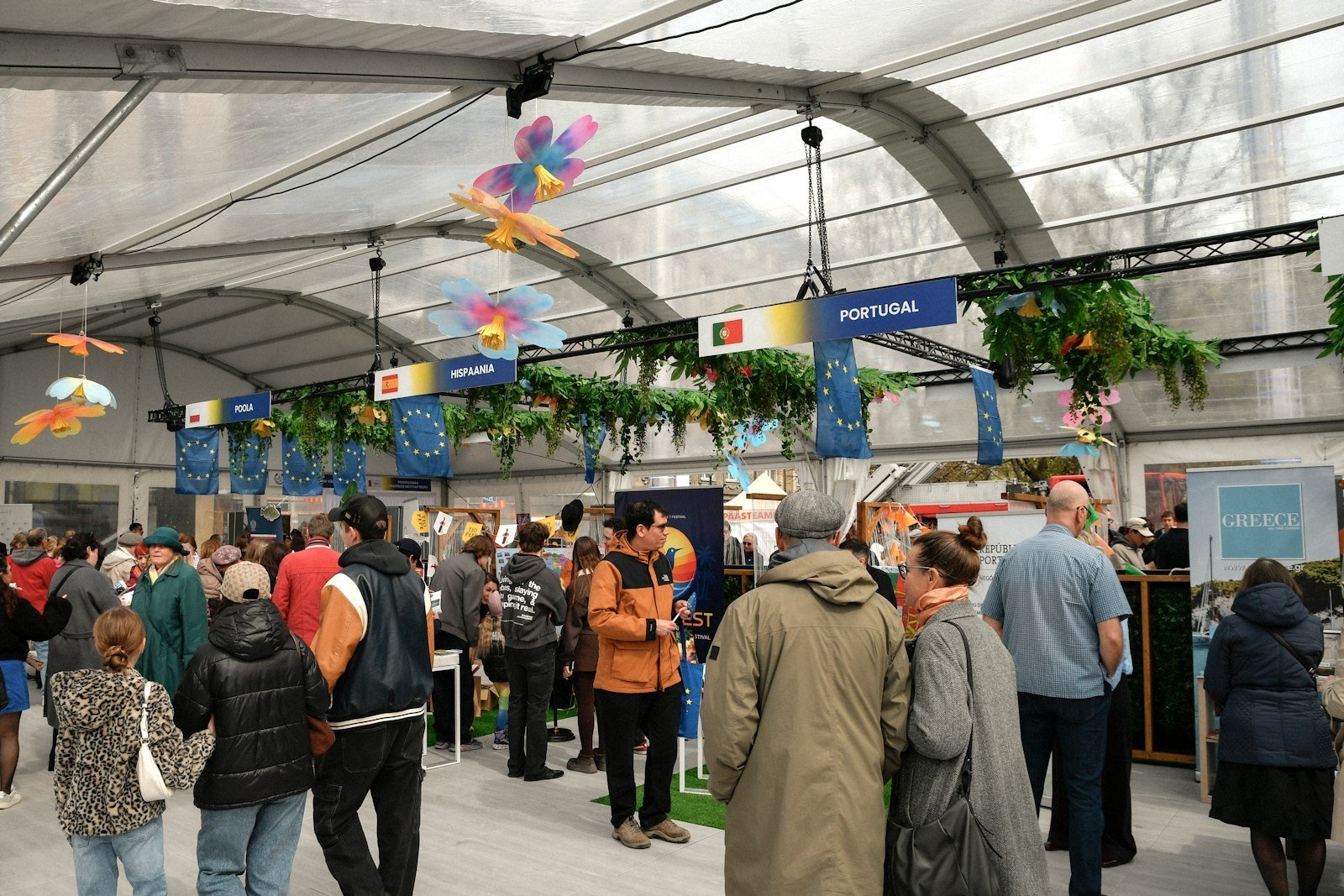
A trade show, home show or expo puts hundreds of potential customers in one room, walking past your business. It can also be an expensive weekend of free pens, sore feet and a pile of business cards nobody follows up. The difference is almost entirely in the planning before the show and the follow-up after it.
This playbook is for small businesses taking a booth at a local or industry show: home and garden shows, bridal shows, business expos and trade fairs. It covers what a show really costs, how to choose one, a booth that stops people, what to say, how to capture leads properly, and the 72-hour follow-up.
What a trade show really costs
The booth fee is the number everyone looks at, and it is usually the smaller part of the bill. The Business Development Bank of Canada (BDC) makes this point in its tips for finding customers at trade shows: “Booth rental is really only part of the total cost of exhibiting.” Its example is a $5,000 booth that brings total costs to about $17,250.
Run your own numbers before you sign anything.
Trade show budget planner
Enter what you expect to spend. The planner adds it up and shows what each lead will cost.
Include staff time even if it is your own. A qualified lead is someone with a real need who agreed to be contacted, not anyone who took a pen. The starting numbers are an example for a small local home show.
Compare the cost per lead with what leads cost you elsewhere. If you know your customer acquisition cost, even better: the CAC and lifetime value playbook shows how to work it out and what you can afford to pay.
Choose the right show and set one goal
There are a lot of shows. BDC estimates 14,000 to 15,000 trade shows run in North America each year, and advises: "You need to focus on specific shows that attract the right audience." Ask the organiser three questions before you book:
- Who came last year? Ask for attendance figures and who the visitors were: homeowners, trade buyers, couples planning a wedding.
- Where would my booth be? Space near the entrance, food or main aisles sees more people than a back corner.
- What is included? Power, a table, chairs, carpet, internet and lead scanning are often extra.
Then set one goal you can count. BDC's guide to trade show return on investment lists the kinds of goals that make sense: sales leads, partners, product launches, customer meetings or competitor research. Pick one. "Get our name out there" cannot be measured. "Book 20 free roof checks" can.
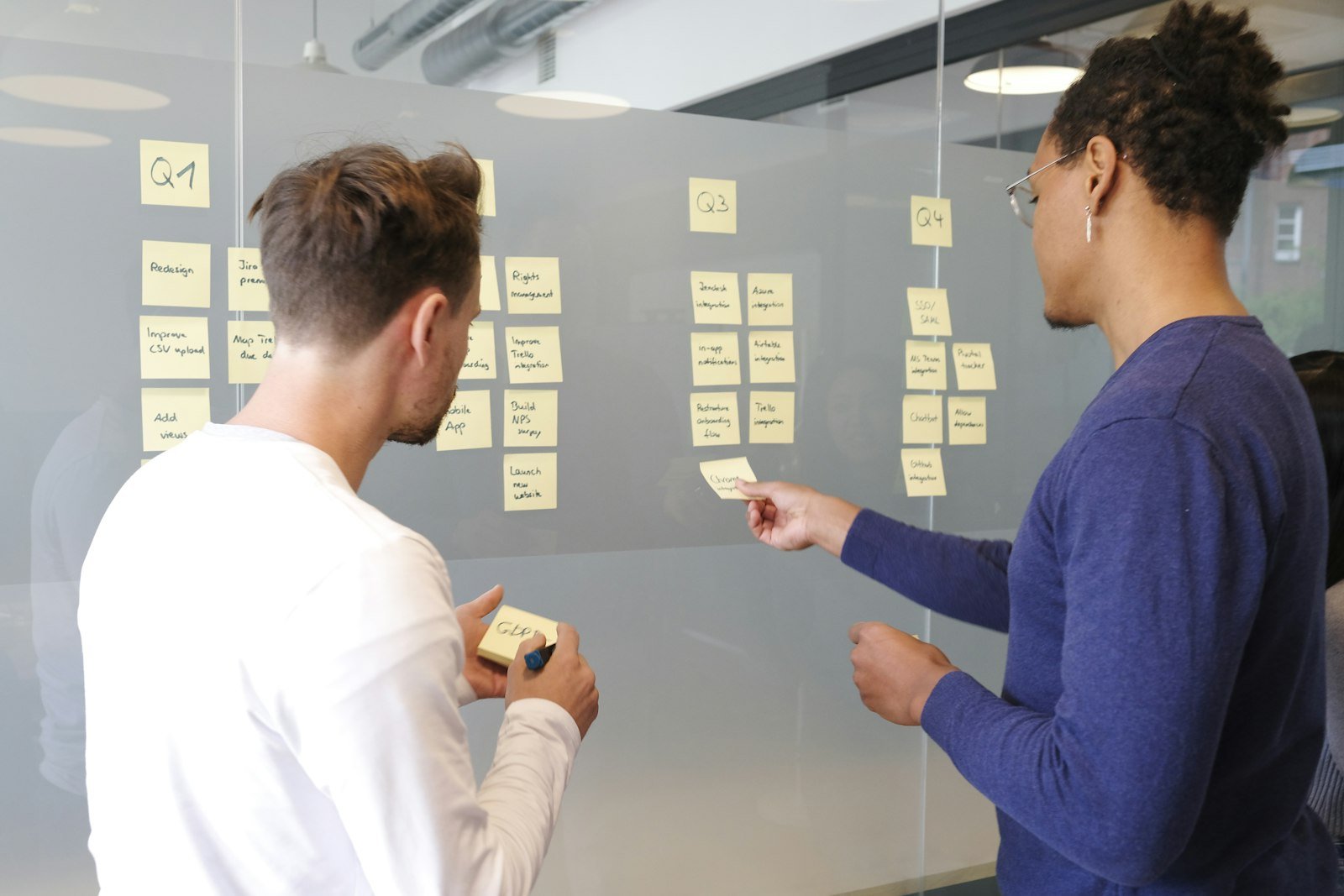
The eight-week countdown
BDC's guide puts it simply: "Your success at a trade show is determined before it even starts." Two jobs in the countdown get skipped most often.
Inviting people before the show. Tell your email list, your past customers and your social media followers where you will be, and give them a reason to visit: a show-only offer or a free check. People who come looking for you are your warmest leads of the weekend.
Writing the follow-up before the show. After two long days on your feet, nobody wants to write emails. Write them in advance, so all you have to do on Monday is press send.
Design a booth that stops people
BDC's advice on booth design is to spend on the back wall: it should carry your company name and what you do, with one strong image and text that can be read from a distance. In its words, "Make sure your company name can be read from afar."
Three rules follow from that:
- One offer, not a list of services. A sign that asks a question the visitor already has ("Roof leaking?" "Planning a wedding for next summer?") works better than "We do everything".
- Nothing between the staff and the aisle. Move the table to the side or the back. A table across the front is a wall.
- A clear next step. A QR code (a square barcode that opens a web page when someone points a phone camera at it) that goes straight to a short booking or sign-up form.
Giveaways should attract the people you want, not everyone. A free pen attracts everyone. A free home maintenance checklist attracts homeowners. If you plan a prize draw, the contest rules in the section on capturing leads apply.

Staff it properly and know what to say
BDC gives a useful rule of thumb: "It's really difficult for one person to engage more than six visitors per hour in meaningful conversation." Use it to work out how many people you need.
BDC also notes that trade shows need a different approach from selling on the phone or in a showroom: open with a question that draws people in, and have someone senior and knowledgeable on hand for detailed questions. Every person on the booth should know the same three lines.
Hi! Quick question: [the question on your sign, such as "is your roof more than 15 years old?"]
What made you stop? [Listen.] And when are you thinking of getting it done: this season, next year, or just looking for now?
The easiest next step is [the offer, such as a free 10-minute photo check]. Scan this code, or I can take your details now. Is it OK if we email and call you about it?
The last line matters. It asks for permission, which you need for the follow-up.
Capture leads you can actually follow up
A business card in a fishbowl is not a lead. A lead is a person with a real need, their contact details, a note of what they want, and their permission to contact them. Capture all four.
| What to capture | Why it matters |
|---|---|
| Name, email and phone | So you can reach them by the channel they prefer |
| What they need and when | So you can sort leads into hot, warm and cold on show night |
| A one-line note from the conversation | So the follow-up sounds like you remember them |
| A tick box for permission to contact them | So your follow-up is allowed under CASL |
Permission. CASL (Canada's Anti-Spam Legislation) covers marketing emails and texts. The CRTC guidance says a business card may give implied consent only in limited cases, that "the onus is on the sender to prove they received consent", and that it is best not to assume implied consent. A pre-ticked box does not count. The simplest approach is an empty tick box on your lead form that the visitor ticks themselves.
Prize draws. If you run a draw to collect entries, the Competition Bureau's contest guidelines apply. Disclose the number and approximate value of the prizes, do not make a purchase the only way to enter, and remember the skill-testing question. The lead magnets playbook compares draws with other ways to collect contacts at events.
This is general information, not legal advice.
The 72-hour follow-up
BDC's advice is to follow up within 72 hours, using the channel each lead prefers, and to track every lead's progress. Leads cool quickly once the show is over.
Hi [first name], it is [your name] from [business]. We met at [show] on [day] and talked about your [need]. I have a spot on [day] for the [offer]. Does that work for you?
Subject: Good to meet you at [show]
Hi [first name],
Thanks for stopping by our booth at [show]. You mentioned [note from the conversation].
As promised, here is [the checklist, the offer or the price guide]: [link].
If you would like to book [the next step], reply to this email or [phone].
[Your name], [business]
Put every lead into your pipeline with a next step and a date, the same as any other enquiry. The sales pipeline playbook shows how, and the follow-up scripts playbook has more messages.
Show-day checklist and measuring the result
Tick these off on the day. Your progress is saved in this browser.
- The back-wall sign is up and readable from the aisle.
- The table is to the side, not across the front.
- The QR code opens the right form on a phone.
- Every staff member knows the opener, the qualifier and the close.
- Breaks are planned so the booth is never empty.
- Every lead form has the permission tick box.
- Leads are sorted into hot, warm and cold on show night.
- The follow-up emails are written and ready to send.
Thirty days after the show, write down four numbers: what it cost in total, how many qualified leads you collected, how many became customers, and the value of that work. BDC suggests asking whether the show was "worth the time and money" and what you would change next time. Then compare the cost per customer with your other channels before you book again. The brand activation playbook has a cost-per-lead calculator you can reuse for any event.
Tools for the job
| Tool | Use it for | Cost |
|---|---|---|
| Canva | The back-wall sign, a one-page handout and the QR code card | Free and paid plans |
| Google Forms | A short lead form with a permission tick box behind the QR code | Free |
| HubSpot CRM | Putting every lead into a pipeline with a next step | Free and paid plans |
| Mailchimp | The day-2 follow-up email to everyone who agreed | Free and paid plans |
| Google Calendar | The eight-week countdown and the day-30 review | Free |
Plans and pricing change. Check each tool's site for current details.
Frequently asked questions
How much does a trade show booth cost?
It varies widely by show and city. The booth fee is only part of it: in BDC's example, a $5,000 booth led to about $17,250 in total once travel, hospitality and other costs were added. Use the budget planner to add up your own costs.
Is a trade show worth it for a small business?
It can be, if your buyers attend and you follow up properly. Divide the full cost by the qualified leads you expect and compare it with what leads cost you from other channels.
How many people should staff a booth?
BDC notes that one person can hold about six meaningful conversations an hour. Divide the visitors you expect each hour by six, and plan cover for breaks.
What should a trade show booth sign say?
Your business name and what you do, readable from a distance, with one offer or one question your ideal customer already has. Avoid long lists of services.
When should I follow up trade show leads?
Within 72 hours, as BDC advises. Call or text hot leads the next day, email everyone who agreed to hear from you, and put each lead into your pipeline with a next step.
Can I email everyone who dropped a business card?
Not automatically. The CRTC says a business card may imply consent only in limited cases and that the sender must prove consent. Ask visitors to tick an empty consent box on your lead form. This is general information, not legal advice.
Related playbooks
Browse every playbook on experiential marketing, or see all marketing playbooks.
Sources
- Trade shows: 6 tips for finding potential customersBusiness Development Bank of Canada (BDC) · updated August 1, 2023
- Practical strategies to maximize your trade show ROIBusiness Development Bank of Canada (BDC) · updated August 1, 2023
- Frequently asked questions about Canada's Anti-Spam LegislationCanadian Radio-television and Telecommunications Commission (CRTC)
- Promotional contests enforcement guidelinesCompetition Bureau Canada
Remar Catapang is a full-funnel marketing strategist based in Ontario, Canada. He has worked in marketing since 2020 and continues to lead search, CRM automation, web, paid media and experiential campaigns for businesses in Canada, the United States, Australia, Egypt and the Philippines. His playbooks are based on that ongoing work. Questions about this playbook: remarcatapangjr@gmail.com