Get customers off delivery apps: direct ordering and loyalty for restaurants
What delivery apps really cost in Canada, how to set up your own ordering, make Google send orders to you, turn app customers into direct regulars with loyalty and email, and a calculator that shows what you’d save.

Restaurants get customers off delivery apps by keeping the apps for discovery and moving repeat orders to their own ordering. In Canada, DoorDash and Uber Eats list delivery commissions of 20% to 30% depending on the plan, while their own commission-free website ordering tools charge about 2.9% in processing. Set up online ordering on your website, make it the preferred ordering link on your Google Business Profile, put a QR code with a first-direct-order reward in every app bag, and run a simple loyalty program that gives a reward within the first few visits. Collect emails and phone numbers with clear consent, follow CASL, and track what share of your orders comes direct each month.
- DoorDash Canada lists delivery commissions of 20%, 25% and 29%; Uber Eats Canada lists 20%, 25% and 30%. Pickup is 8% to 15%.
- Both companies offer commission-free website ordering with about 2.9% processing, so “direct” doesn’t have to mean building an app.
- On Google Business Profile you can set your own ordering link as preferred, or turn third-party ordering off.
- Restaurant and coffee programs hold 8 of the top 10 spots in the 2026 LoyauT ranking of Canadian loyalty programs.
- 42% of Canadian diners were loyalty program members in TouchBistro’s 2025 survey, up from 29%.
- In Ontario, licensed restaurants can’t run frequent-buyer rewards on alcohol (AGCO), so earn points on food only.
Key terms explained (16)
- Third-party delivery app
- A marketplace such as DoorDash, Uber Eats or SkipTheDishes where customers order from many restaurants and a courier delivers.
- Commission
- The percentage of each order the app keeps as its fee.
- Direct ordering
- Customers ordering from your own website, app or phone line, so you keep the customer relationship.
- Commission-free ordering
- Online ordering software that charges a processing fee or subscription instead of a percentage commission.
- Processing fee
- The card payment fee on each order, often a percentage plus a few cents.
- On-demand courier
- A delivery service you pay per trip to deliver your own online orders.
- First-party data
- Customer information you collect yourself, such as emails, phone numbers and order history.
- Loyalty program
- A system that rewards repeat visits or spending with points, free items or perks.
- Redemption
- When a member uses their points or reward.
- Repeat rate
- The share of customers who order again within a set time, such as 60 days.
- Customer acquisition cost (CAC)
- What you spend to win one new customer.
- Google Business Profile (GBP)
- Your free listing on Google Search and Maps, with hours, menu, reviews and ordering links.
- Preferred provider
- The ordering link you choose to show first on your Google Business Profile.
- CASL
- Canada’s Anti-Spam Legislation: the rules for marketing emails and texts.
- PIPEDA
- Canada’s federal private-sector privacy law, which covers how businesses collect and use personal information.
- AGCO
- Alcohol and Gaming Commission of Ontario, which regulates how licensed restaurants promote alcohol in Ontario.
Delivery apps solved a real problem: they put your menu in front of people who’d never heard of you and brought a courier to the door. But every order that comes through an app also teaches the customer to order through the app next time, and the app keeps a share of every one of those orders, and the customer relationship mostly stays with the app.
This playbook doesn’t ask you to quit the apps. It shows how to use them for what they’re good at (being found) and move your regulars to ordering from you. It covers what the apps charge in Canada, your direct ordering options, the Google settings that matter, how to convert app customers, how to run loyalty and email properly, and a savings calculator.
What delivery apps cost restaurants in Canada
Both big apps publish their Canadian plan rates. As listed on their merchant pricing pages (checked November 3, 2026):
| Service | Delivery | Pickup | Notes from the pricing page |
|---|---|---|---|
| DoorDash Canada | Basic 20%, Plus 25%, Premier 29% | 10% on Basic, 8% on Plus and Premier | DashPass delivery orders on Plus are 27%. Pickup rates need pickup menu prices to match in-store. Plans are for restaurants with 75 or fewer locations in Canada. |
| Uber Eats Canada | Lite 20%, Plus 25%, Premium 30% | 10%, or 15% without validated in-store pricing | Self-delivery 15%. Uber One member orders on Plus add 5%. |
| Their website ordering tools | DoorDash Online Ordering: 2.9% + 30 cents processing per order. Uber Eats Webshop: 2.9% processing. | Commission-free ordering on your own website. You still need a way to deliver, or customers pick up. | |
DoorDash’s figure comes from its pricing and products guide for Canada (September 25, 2025). The direct options also need a delivery plan: your own drivers, an on-demand courier such as Uber Direct (priced by distance, according to Uber), or pickup only.
Keep the apps, but change their job
Around one in four Canadians regularly use meal delivery apps, according to a 2025 Dalhousie University Agri-Food Analytics Lab survey reported by CTV News. For many restaurants, the apps are the biggest shop window they have. Quitting them usually means losing new customers.
So give the apps one job: finding new customers. Treat the commission on a first app order as the cost of winning that customer, the same way you’d treat an ad. Then make sure the second, third and tenth orders come to you. The customer acquisition cost and lifetime value playbook shows how to judge whether that first order was worth it.
| Use the apps for | Use your own ordering for |
|---|---|
| Being found by people who don’t know you | Regulars and anyone who’s ordered before |
| Delivery to addresses outside your own delivery area | Pickup orders, which cost you least to fill |
| Testing new items with a wider audience | Catering, large orders and loyalty rewards |
| Late-night or peak overflow | Collecting emails, phone numbers and order history |
Set up your own online ordering
“Direct” doesn’t mean you need to build an app. There are three common ways to take orders yourself:
| Option | How it’s priced | Good for |
|---|---|---|
| Ordering from your point of sale (POS): the online ordering module of your till system | Usually a monthly fee plus card processing | Restaurants that want orders, menu and loyalty in one system |
| Commission-free ordering from a delivery company (DoorDash Online Ordering, Uber Eats Webshop) | About 2.9% processing (plus 30 cents per order on DoorDash) | A quick start if you already use that app |
| Your own branded app | Monthly fee or build cost | Busy brands with many repeat customers and a loyalty program |
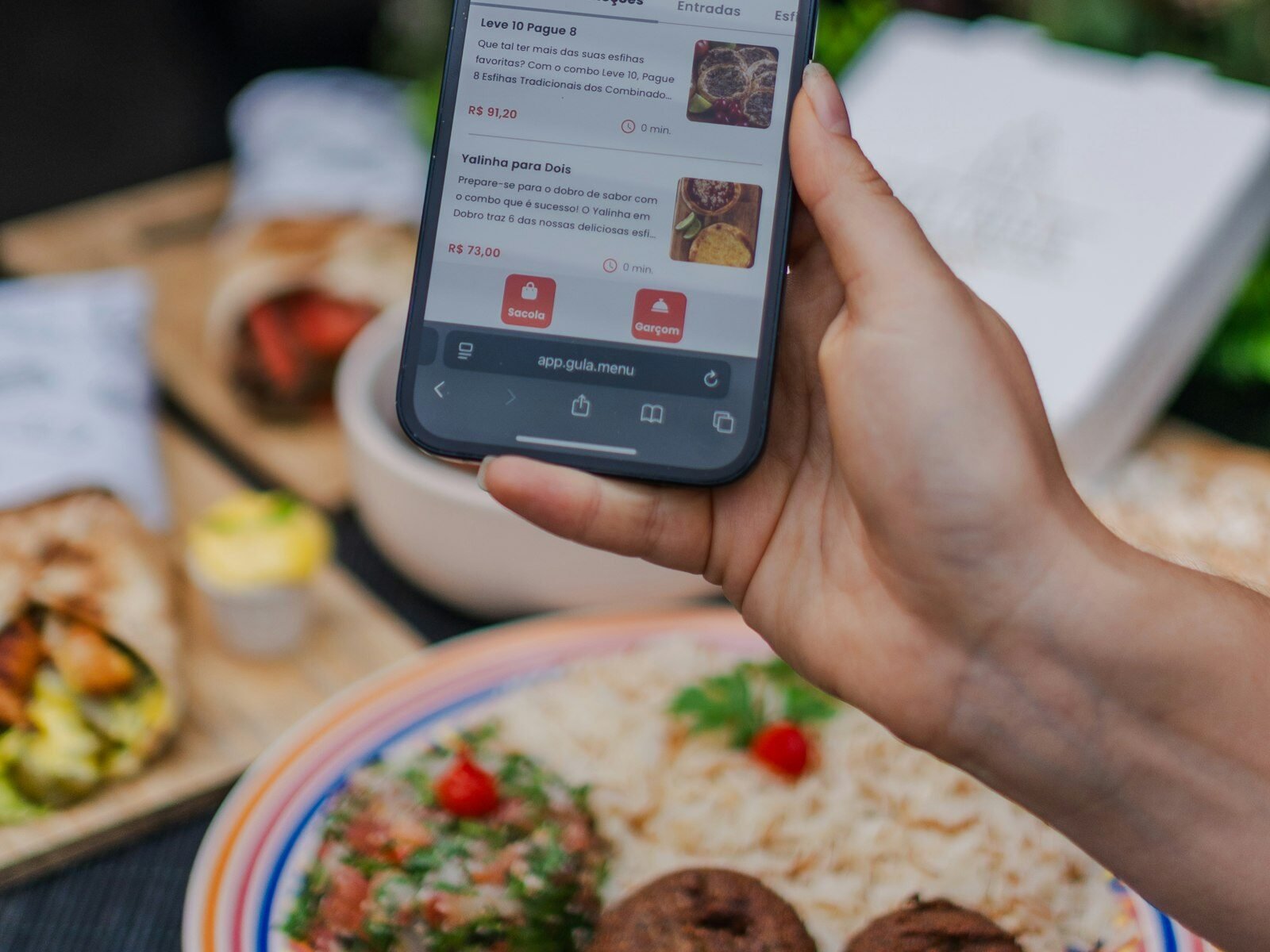
Whichever you choose, the ordering page needs to beat the app on the things customers notice:
- Speed on a phone. Menu first, a few taps to check out, and guest checkout allowed.
- The same menu and photos as in the restaurant and on the apps, with prices that match in-store if you advertise them that way.
- A reason to order direct: lower prices than the app, loyalty points, a free side or faster pickup. Say it on the page.
- Clear pickup times and, if you deliver, the delivery area and fee shown before checkout.
- Honest totals. Under the Competition Bureau’s drip pricing rules, mandatory fees (other than government taxes) must be in the advertised price.
Make Google send orders to you
Many people order straight from Google Search or Maps. Google’s help page on managing online ordering gives restaurants more control than most owners realise:
- Add your own link. Under Food ordering in your Business Profile, choose “Add a link” to send customers to your own ordering page.
- Set it as preferred, separately for pickup and delivery, so your link is the one Google favours.
- Remove or turn off third-party links. You can remove a provider’s link, or turn off “Accept orders on your profile” to hide all third-party ordering. Google says providers “must remove third-party links from a profile within 5 business days” after you ask. In October 2026, Google began letting operators switch off individual providers from the dashboard, TechWyse reported.
- Keep the menu link yours. Google’s business guidelines say “Menu URLs can’t be direct links to third-party ordering or delivery services.” Link to your own menu page.
Do the same on your website: an “Order online” button at the top of every page that goes to your ordering, not to an app. The Google Business Profile guide covers the rest of your profile, and the multi-location playbook shows how to do it for every location.
Turn app customers into direct customers
The app holds the customer relationship, but you own the food, the bag and the counter. That’s where conversion happens.
- Put a card in every bag. A short thank-you, a QR code to your ordering page and one clear reward for the first direct order, such as a free side or points to start.
- Use the counter. At pickup, staff can say: “Next time, order on our website and you’ll earn points.” A sign by the pickup shelf says the same.
- Make direct the better deal. If your app prices are higher than in-store to cover commission, say so plainly on your own site: “Our best prices are here.”
- Check your app agreement first. Read your delivery app’s merchant terms on pricing and in-bag materials before you print, so nothing you do breaks the contract.
Design a loyalty program people use
Restaurant loyalty is now the strongest category in Canada. The 2026 LoyauT study by adviso and Ad Hoc Research (15,000 Canadians, 83 programs, released October 29, 2026) found restaurant and coffee programs hold 8 of the top 10 spots, up from 4 in 2025. Canadians belong to 22 programs on average but regularly use 9, and 69% say loyalty programs help them save money.
TouchBistro’s 2025 Canadian Diner Trends Report (1,000 diners, surveyed by The Harris Poll in October 2024) found 42% of diners are loyalty members, 92% of those members belong to quick-service programs, and the top reason to join is earning free items. Scene+ and Bond’s 2026 findings (9,500+ Canadians) add that 73% value ease of receiving and claiming rewards and 60% prefer small or medium rewards, while 28% redeem once a year or less.
| Program type | How it works | Best for |
|---|---|---|
| Visit-based | “Your 6th meal is on us”: a digital punch card | Simple menus with similar prices; easiest to explain at the counter |
| Points | Points per dollar, rewards at set levels | Menus with a wide price range; rewards bigger orders |
| Tiers | Better perks after a set number of visits a year | Brands with very frequent regulars, such as coffee and lunch spots |
| Paid membership | A monthly fee for perks such as free delivery or a daily item | Large brands with high order frequency; harder to start |
Rules of thumb that match the research: make the first reward reachable within the first few orders, keep rewards small and frequent, let people redeem in one tap, and send a reminder when a reward is close. These are working guidelines, not published standards.
Alcohol in Ontario: the AGCO’s advertising and promotion guidelines for licensed restaurants say frequent-buyer programs for alcohol aren’t allowed and benefits must be tied to a single purchase. Set your program so alcohol doesn’t earn or redeem points. Other provinces have their own rules.
Customer data, privacy and CASL
The whole point of direct ordering is knowing your customers. Collect only what you’ll use, and ask properly.
| Collect | Why | How to ask |
|---|---|---|
| Email or mobile number | Order updates, loyalty, offers | At checkout or loyalty sign-up, with a separate, unticked box for marketing messages |
| First name | Friendlier messages | At checkout |
| Birthday month | A birthday reward | Optional at sign-up |
| Favourite location | Local offers and hours | Optional at sign-up |
| Order history | Reorder buttons, relevant offers | Explained in your privacy policy |
- Privacy (PIPEDA). The Office of the Privacy Commissioner’s guidelines for obtaining meaningful consent ask businesses to put key information up front (what you collect, why and who it’s shared with) and to give clear yes-or-no choices for anything beyond what the service needs. Express consent is generally needed when information is sensitive, when a use is outside people’s reasonable expectations, or when it creates a meaningful risk of significant harm.
- Marketing messages (CASL). The CRTC’s implied consent guidance says a purchase creates implied consent for two years and an inquiry for six months. A clear opt-in checkbox gives you express consent that doesn’t run out. Every message needs your business details and an unsubscribe link, and opt-outs must be processed within 10 business days.
This is general information, not legal advice. Check your privacy policy and consent wording with a professional, especially if you collect data in Quebec, which has its own privacy law.
Messages that bring customers back
Once someone has ordered direct and opted in, a few automated messages do most of the work. The timings below are starting points to test, not rules.
| When | Message | Goal |
|---|---|---|
| Right after the first direct order | Welcome, points balance, how close the first reward is | Second order |
| About 10 to 14 days later | “Your usual?” with a one-tap reorder | Make direct a habit |
| When a reward is close | “One more order to your free [item]” | Reach the first reward |
| Birthday month | A birthday treat | Goodwill and a visit |
| After about 45 days with no order | “We miss you” with a small offer | Win back lapsed customers |
Subject: Your usual, two taps away
Hi [first name], thanks for ordering from [Restaurant] on our website. You’ve got [points] points, just [number] away from a free [item].
Reorder your last meal: [link]
Ordering here earns you points on every order.
[Restaurant], [address] · Unsubscribe: [link]
Thanks for ordering from [Restaurant]!
Next time, order direct on our website and get [reward] on your first order, plus points on every order after.
Scan the code or visit [short web address].
Same food, straight from our kitchen.
Calculate what you’d save
Enter your monthly app delivery orders and the share you think you could move to your own ordering. The calculator compares what those orders cost on the app with what they’d cost direct.
Delivery app savings calculator
Type over the examples. Nothing is saved or sent anywhere.
On the app today
Moving orders direct
Defaults are an example: 2.9% plus 30 cents matches DoorDash Online Ordering’s listed processing fee. Put delivery cost at 0 if moved orders become pickup. The calculator compares fees only, not food cost or the value of the customer data you gain.
What to measure
| Measure | How to calculate it | Why it matters |
|---|---|---|
| Direct share of orders | Direct orders ÷ all online orders, monthly | The headline number: is it going up? |
| Cost per order by channel | Commission or fees ÷ orders, for each app and for direct | Shows the real gap between channels |
| Repeat rate | Customers who order again within 60 days ÷ first-time customers | Shows whether people come back |
| Bag card scans and first direct orders | QR scans (tracked link) and orders using the first-order reward | Shows whether app customers are converting |
| Active loyalty members | Members who ordered in the last 90 days | Sign-ups alone don't count |
| Opted-in contacts | Emails and phone numbers with marketing consent | The list you can reach without paying an app |
Put these on one page each month. The monthly marketing report playbook has the structure.
Direct ordering checklist
Tick these off as you go. Your progress is saved in this browser.
- Current delivery app plan and commission rate checked on each app's pricing page.
- Own online ordering live, fast on a phone, with guest checkout.
- Same menu and photos across in-store, website and apps.
- A clear reason to order direct shown on the ordering page.
- Prices on your own ordering include every mandatory fee except taxes.
- Own ordering link added to Google Business Profile and set as preferred.
- Third-party ordering links reviewed on Google; unwanted ones removed or turned off.
- Google menu link points to your own menu page, not a delivery app.
- Delivery app agreement checked for pricing and in-bag material rules.
- Bag card with QR code and first-direct-order reward in every app bag.
- Loyalty program with a first reward reachable within the first few orders.
- Alcohol excluded from earning and redeeming points (Ontario AGCO rule).
- Sign-up form with a separate, unticked marketing checkbox and a plain-language privacy note.
- Welcome, second-order, birthday and win-back messages set up, each with an unsubscribe link.
- Direct share of orders tracked monthly.
Tools for the job
| Tool | Use it for | Cost |
|---|---|---|
| Your point-of-sale online ordering module | Orders, menu and loyalty in one system | Usually a monthly fee plus processing |
| DoorDash Online Ordering or Uber Eats Webshop | Commission-free ordering on your website | About 2.9% processing |
| Google Business Profile | Preferred ordering link, removing third-party links, menu link | Free |
| An email and SMS platform | Welcome, reorder, birthday and win-back messages with unsubscribe handling | Free and paid plans |
| A QR code generator with tracked links | Bag cards and counter signs you can measure | Free and paid plans |
Fees, plans and features change. Check each provider's current pricing page before you sign up.
Frequently asked questions
How much do delivery apps charge restaurants in Canada?
DoorDash Canada lists delivery commissions of 20%, 25% and 29% by plan, and Uber Eats Canada lists 20%, 25% and 30%. Pickup orders are 8% to 15%. Check each company's pricing page, as rates change.
How do I get customers to order directly from my restaurant?
Give them a reason and make it easy: a fast online ordering page, better prices or loyalty points for ordering direct, a QR code card in every app bag, your own link set as preferred on Google, and staff who mention it at pickup.
Should a restaurant stop using delivery apps?
Usually not. Apps help new customers find you. Use them for discovery, treat the first app order as the cost of winning a customer, and move repeat orders to your own ordering.
Can I remove delivery app links from my Google Business Profile?
Yes. In the Food ordering section you can remove a provider's link, set your own link as preferred, or turn off third-party ordering entirely. Google says providers must remove links within 5 business days of a request.
What is the best loyalty program for a small restaurant?
A simple one: a digital punch card or points with a first reward reachable within the first few orders, small rewards that are easy to redeem, and reminders when a reward is close. Canadian research shows people value easy-to-claim, small and frequent rewards.
Can Ontario restaurants give loyalty points on alcohol?
No. The AGCO's guidelines say frequent-buyer programs for alcohol aren't allowed for licensed establishments. Exclude alcohol from earning and redeeming points.
Related playbooks
Browse every playbook on marketing strategy, or see all marketing playbooks.
Sources
- Pricing: partnership plansDoorDash Merchants Canada · checked November 3, 2026
- Which DoorDash pricing and products are right for you?DoorDash Merchants Canada · September 25, 2025
- PricingUber Eats Merchants Canada · checked November 3, 2026
- One in four Canadians regularly use meal delivery apps: surveyCTV News · September 10, 2025 (Dalhousie Agri-Food Analytics Lab)
- Manage online ordering optionsGoogle Business Profile Help · checked November 3, 2026
- Google gives restaurants a say in where search traffic becomes ordersTechWyse · October 29, 2026
- Guidelines for representing your business on GoogleGoogle Business Profile Help · checked November 3, 2026
- LoyauT 2026: The restaurant industry tops Canada's loyalty programsadviso and Ad Hoc Research via CNW · October 29, 2026
- 2025 Report: Top dining and food trends in CanadaTouchBistro · 2025 Canadian Diner Trends Report (The Harris Poll, 1,000 diners)
- Canadians shifting focus to everyday loyalty rewards, Scene+ and Bond report saysRetail Insider · Mario Toneguzzi · May 22, 2026
- Registrar's guidelines for advertising and promotionAlcohol and Gaming Commission of Ontario · checked November 3, 2026
- Guidelines for obtaining meaningful consentOffice of the Privacy Commissioner of Canada · modified August 11, 2025
- Guidance on implied consent under Canada's anti-spam legislationCRTC · checked November 3, 2026
- Drip pricingCompetition Bureau Canada · updated August 24, 2026
Remar Catapang is a full-funnel marketing strategist based in Ontario, Canada. He has worked in marketing since 2020 and continues to lead search, CRM automation, web, paid media and experiential campaigns for businesses in Canada, the United States, Australia, Egypt and the Philippines. His playbooks are based on that ongoing work. Questions about this playbook: remarcatapangjr@gmail.com